Design and composition

Begin on paper with a brief, an original or authorised reference and the intended visual hierarchy. Identify the main shape, supporting elements, negative space and the direction in which the viewer reads the design. Keep a study distinguishable from a finished commission.
Linework and shading studies
Compare line weight, spacing, edge and tonal relationships in paper studies. Describe what you can actually observe. A photograph does not reveal an artist’s complete process, equipment settings or working conditions; avoid inventing those details.
Colour and contrast
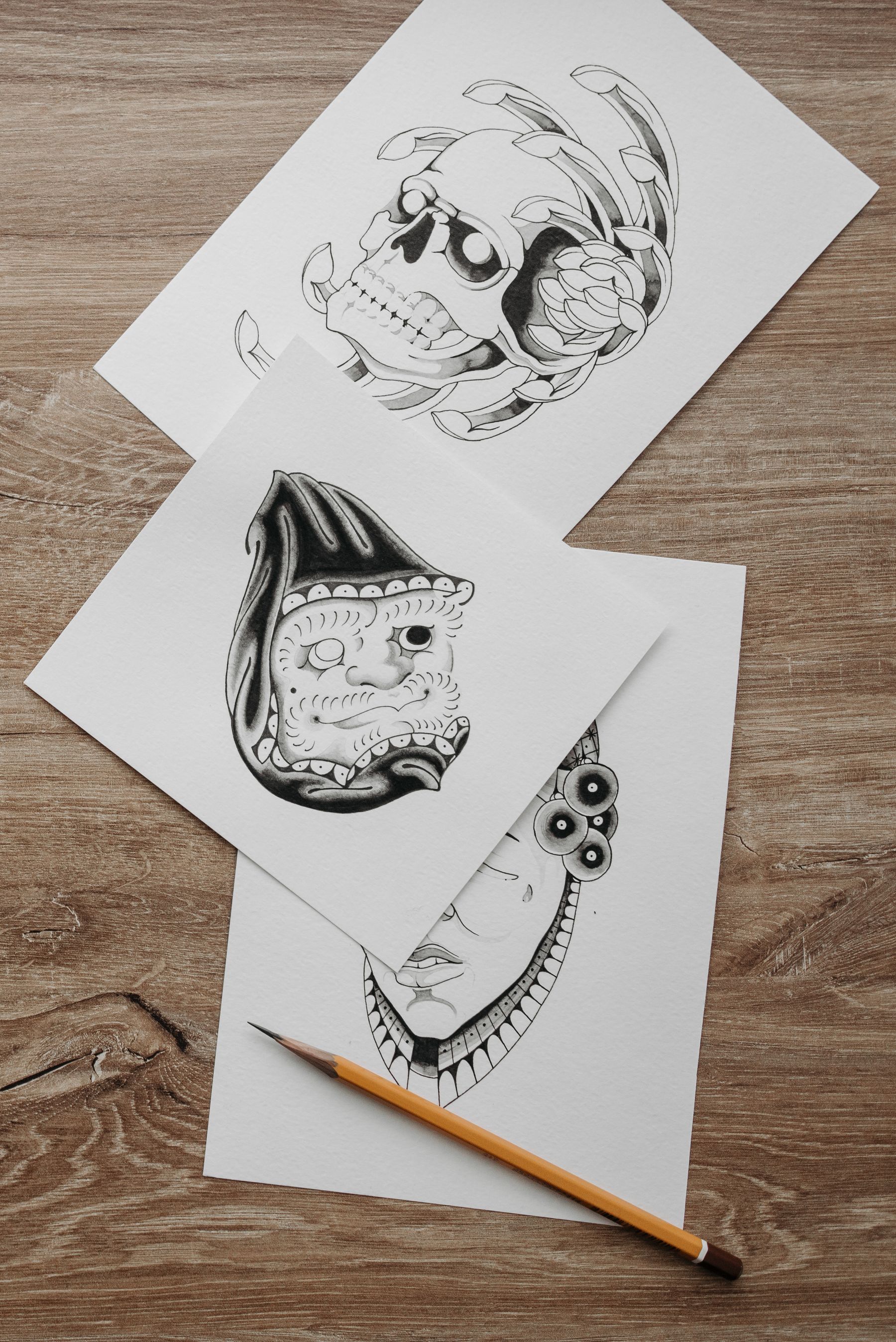
Record hue, value, contrast and the role each area plays in a composition. Label the medium and source. A drawing exercise does not predict healed skin appearance or establish product suitability for a person.
Portfolio development
Show your own contribution, the medium, collaborator credits and permissions. Distinguish concept drawings, supervised exercises, completed work and any image supplied by someone else. Do not use an editorial photograph as a claimed client result.
Learning boundaries
Practical tattooing needs appropriate qualified instruction, supervision and applicable local arrangements. These resources do not provide needle settings, invasive step-by-step procedures, a qualification or permission to work on a person.