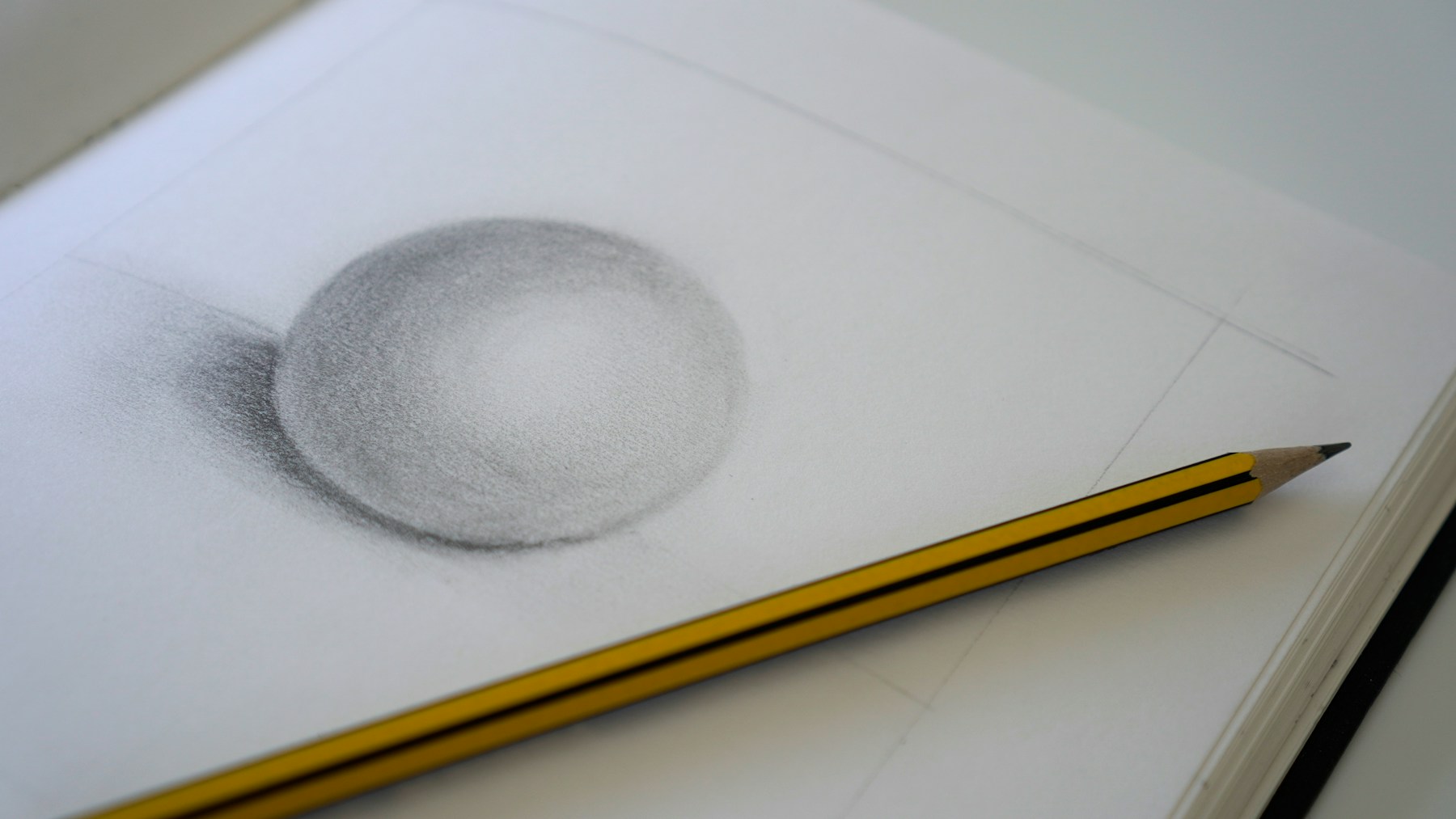
A paper-based visual study can explore line, shape, rhythm and negative space. State the creative brief and the relationship you want to discuss before comparing alternatives.
A drawing exercise does not establish a tattooing method, body-placement suitability or readiness for practical work. Keep the observation on paper distinct from an approved professional procedure.
QUESTIONS FOR A CLOSER READING
- What visual question is being studied?
- What changed between alternatives?
- What does this drawing not establish?
Keep a usable source trail
Record the original creator or organisation, title, relevant date and source context. Separate what the material states from your interpretation. A short excerpt or photograph should not replace the complete responsible reference.
Write down the unresolved point
A useful next step is a precise question for another source or discussion. Practical methods, suitability and professional progression require the responsible qualified provider. A reading note does not issue a qualification, prescribe an invasive task or authorise practice.