Name the visual question
Choose one relationship to examine, such as the rhythm of a line, the balance of shapes or the space between elements. State the intended visual effect in plain words. This is a paper-based design discussion, not a tattooing procedure, placement recommendation or assessment of practical competence.
Compare alternatives deliberately
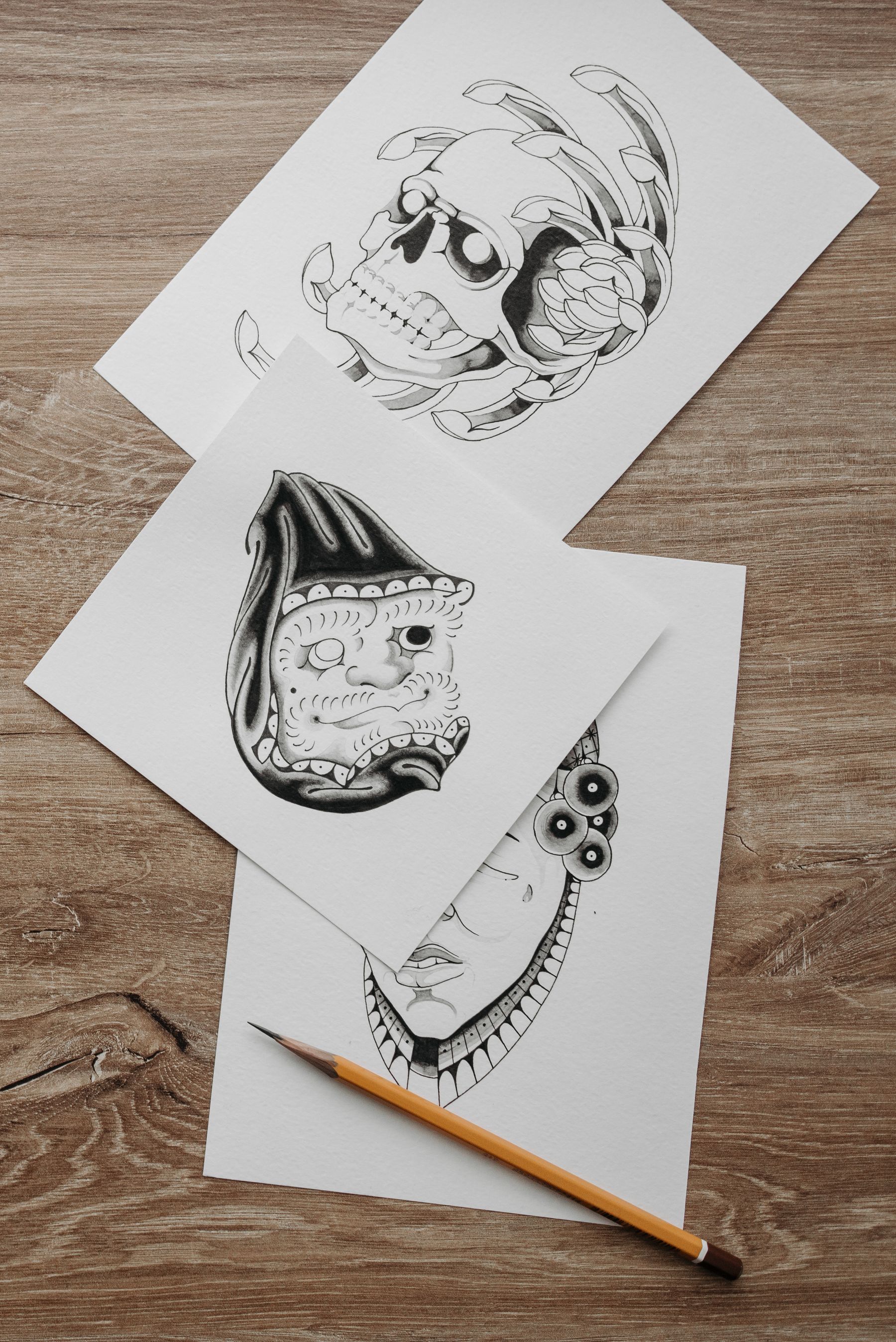
Make original paper variations or work with references you can authorise. Change one visual relationship at a time so that you can explain what differs between the studies. Keep the reference and the creative brief available rather than presenting an isolated drawing as an answer to every context.
Describe the effect you observed
Discuss what became denser, clearer, more restrained or more visually active in the comparison. Explain which observation is yours and which interpretation came from a source or educator. A useful discussion can make a choice understandable without declaring one design universally suitable.
Keep the limits of the study
A paper exercise does not establish an application method, suitability for a person or readiness for practical work. Any practical activity requires the appropriate qualified instruction, approved scope and actual requirements. Keep visual exploration and professional authorisation distinguishable.